Moss people
Ringkasan
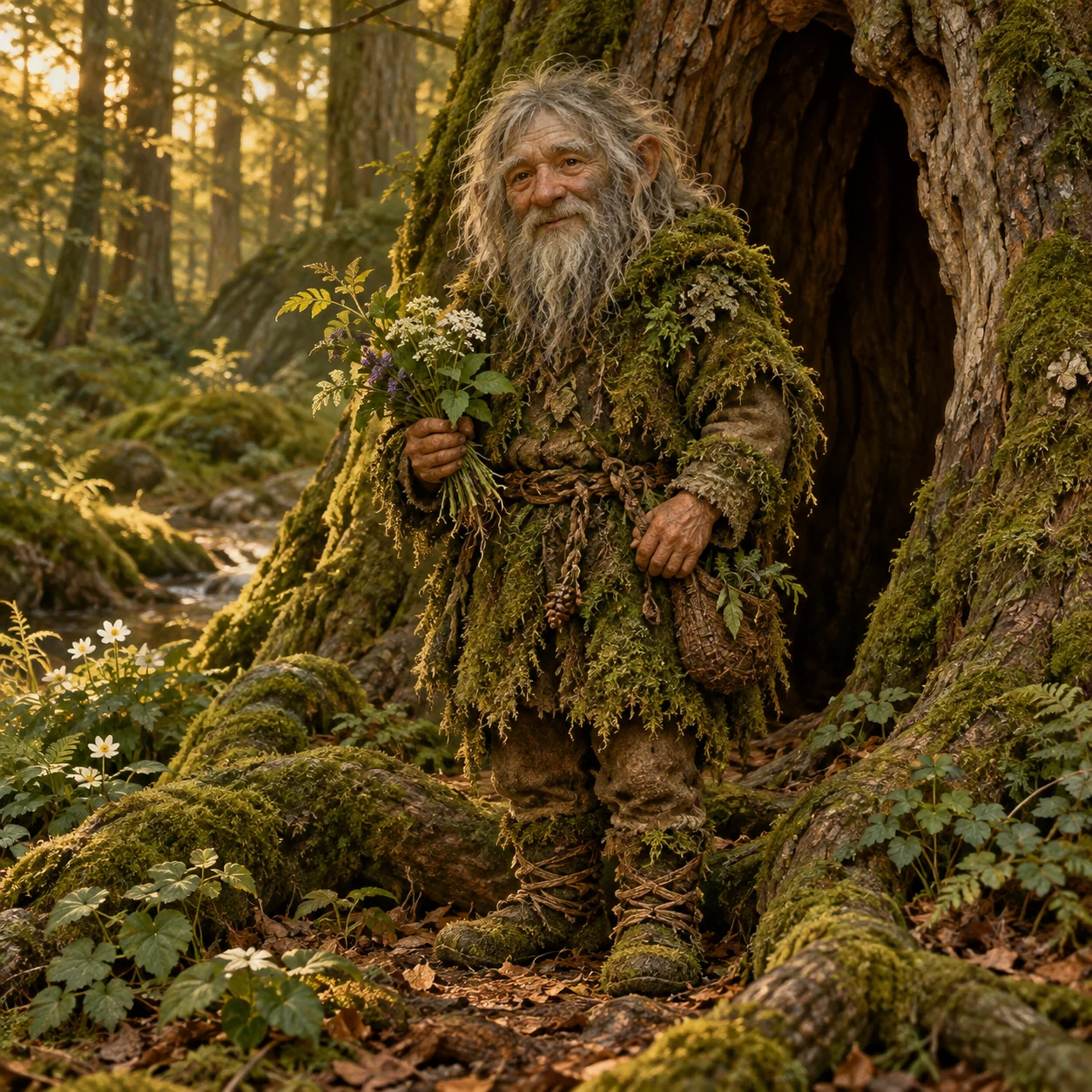
Orang lumut (Moosleute) adalah golongan peri dalam cerita rakyat Jerman, bertubuh kecil, berbalut lumut, dan hidupnya terikat erat pada pohon dan hutan.
Moss people (Moosleute) are a class of fairy-folk in German folklore, small in size, clad in moss and bound closely to trees and the forest.
Kisah dan tradisi
Orang lumut, juga disebut orang kayu (Holzleute), orang hutan (Waldleute), atau orang liar, adalah golongan peri dalam cerita rakyat Jerman yang dibandingkan dengan kurcaci, elf, atau roh. Kata Schrat dan Waldschrat juga dipakai untuk mereka. Moosweiblein, yang perempuan, dikenal di Sachsen, Thüringen, Harz, Vogtland, Oberpfalz, Bayerischen Wald, Franken, Riesengebirge, hingga Westfalen. Mereka biasanya sebesar anak-anak, kelabu dan tampak tua, berbulu, dan berpakaian lumut, meski kadang lebih besar atau malah cantik. Hidup mereka terikat pada pohon: bila kulit dalam sebuah pohon terkelupas karena gesekan, seorang perempuan hutan mati. Mereka tinggal di rongga tanah, pohon berlubang, atau pondok lumut, tidur di atas lumut, dan bisa menikah serta beranak. Mereka kadang meminjam barang atau meminta bantuan manusia dan selalu membalas dengan murah hati, sering dengan nasihat atau roti, tetapi mudah tersinggung bila hadiahnya ditolak atau bila diberi roti jintan, yang mereka benci. Sebagian mitos menyebut mereka meminta ASI untuk bayi mereka atau mencuri anak manusia. Perempuan lumut dapat menyebarkan wabah, tetapi juga menunjukkan tanaman obat untuk menyembuhkannya. Mereka sering menjadi buruan perburuan liar. Untuk menyelamatkan diri, mereka berlindung di tunggul pohon yang ditandai tiga salib oleh penebang saat pohon itu tumbang.
Moss people, also called wood folk (Holzleute), forest folk (Waldleute) or wild folk, are a class of fairy-folk in German folklore compared with dwarfs, elves or spirits. The words Schrat and Waldschrat are used for them too. The female Moosweiblein are known in Saxony, Thuringia, the Harz, the Vogtland, the Upper Palatinate, the Bavarian Forest, Franconia, the Giant Mountains and as far as Westphalia. They are usually the size of children, grey and old-looking, hairy and dressed in moss, though sometimes larger or even pretty. Their lives are bound to trees: if a tree's inner bark is rubbed loose, a wood-woman dies. They live in earth holes, hollow trees or moss huts, sleep on moss, and can marry and have children. They sometimes borrow things or ask people for help and always repay generously, often with advice or bread, but are easily offended if their gifts are spurned or if given caraway bread, which they hate. Some myths have them asking for breast milk for their young or stealing human children. Moss women can spread plague, yet also show people the healing herbs against it. They are often the quarry of the Wild Hunt. To escape, they take refuge on tree stumps that a woodsman marked with three crosses while the tree was falling.
Fakta utama
- Budaya / Culture
- Tradisi Jerman
- Kawasan / Region
- Eropa
- Negara / Country
- DE, CZ
- Klasifikasi / Classification
- Fairy
- Habitat
- Forest
- Kemampuan / Abilities
- Pengetahuan obat, Wabah
Nama lain / Alternate names
Moosleute, Holzleute, Waldleute, Moosweiblein, Waldschrat
Tahukah kamu? / Did you know?
Orang lumut konon membenci roti jintan dan sering terdengar berseru "Kümmelbrot, unser Tod!" ("Roti jintan, maut kami!").
Moss people were said to hate caraway bread and were often heard crying 'Kümmelbrot, unser Tod!' ('Caraway bread, our death!').