Les Lavandières
Ringkasan
Les Lavandières atau Midnight Washerwomen adalah tiga perempuan tua pencuci dalam mitologi Kelt yang pada tengah malam mencuci kain kafan orang yang akan meninggal.
Les Lavandières, the Midnight Washerwomen, are three old washerwomen of Celtic myth who at midnight wash the shrouds of those about to die.
Kisah dan tradisi
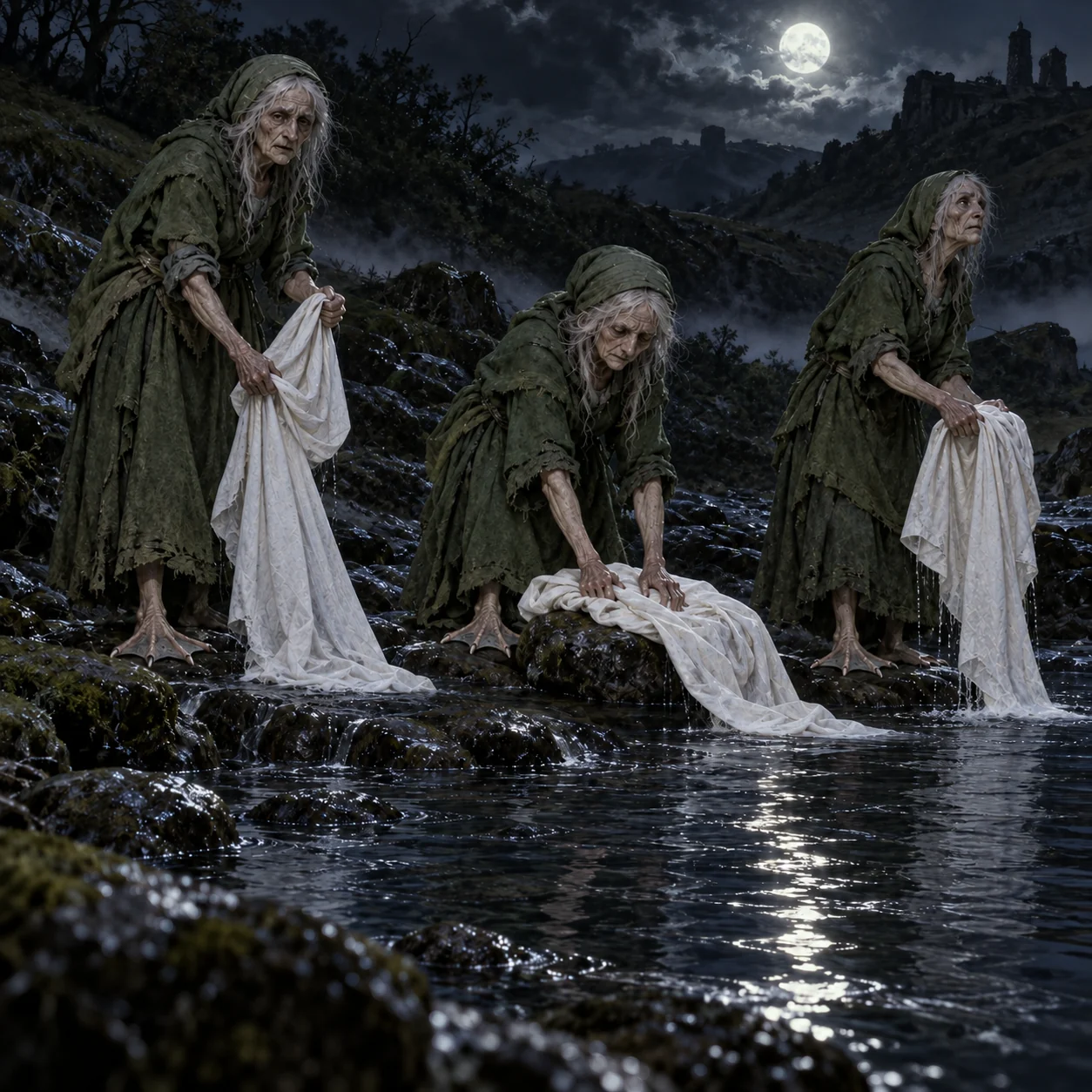
Les Lavandières, atau Midnight Washerwomen, adalah tiga perempuan tua pencuci dalam mitologi Kelt (Celtic mythology). Namanya dalam bahasa-bahasa Kelt antara lain kannerezed noz di Brittany dan Bean nighe dalam bahasa Gaelik (Gaelic); mereka juga dikenal dalam cerita rakyat Kelt Iberia sebagai Las Lavanderas di Cantabria, As lavandeiras di Galicia, Les Llavanderes di Asturias, dan Bruxas lavadeiras di Portugal. Menurut mitos Brittany, ketiganya pergi ke tepi air pada tengah malam untuk mencuci kain kafan orang yang akan meninggal, atau menurut mitologi Kelt mencuci pakaian berdarah mereka; mereka mungkin berhubungan dengan dewi tiga kematian dan pembantaian. Para pencuci ini kecil, berpakaian hijau, dan berkaki berselaput, mungkin sebab mereka juga disebut cannard noz ("bebek malam") dalam cerita rakyat Breton. Pada abad ke-19 kepercayaan ini sangat hidup di Brittany dan Normandy serta tercatat di banyak wilayah Prancis (France) lain, dan ditulis oleh Guy de Maupassant, Victor Hugo, hingga George Sand. Pencuci Breton tidak suka diganggu: mereka meminta pejalan membantu memeras kain, mematahkan lengan yang membantu dengan enggan dan menenggelamkan yang menolak. Menurut artikel fr, George Sand menyebut mereka arwah ibu pembunuh anak yang terkutuk mencuci sesuatu yang dari dekat ternyata mayat bayi.
Les Lavandières, the Midnight Washerwomen, are three old washerwomen of Celtic myth. Their Celtic names include kannerezed noz in Brittany and Bean nighe in Gaelic; Iberian Celtic folklore knows them as Las Lavanderas in Cantabria, As lavandeiras in Galicia, Les Llavanderes in Asturias and Bruxas lavadeiras in Portugal. In Breton lore the three go to the water at midnight to wash shrouds for the soon-to-die, or in Celtic myth the bloodied clothes of those about to die; they may be linked with the triple goddess of death and slaughter. The washerwomen are small, dressed in green and web-footed, which may be why Breton folklore also calls them cannard noz ('night ducks'). In the 19th century the belief was very much alive in Brittany and Normandy and attested in many other parts of France, and was written up by Guy de Maupassant, Victor Hugo and George Sand. Breton washerwomen hate being disturbed: they ask passers-by to help wring the linen, breaking the arms of those who help grudgingly and drowning those who refuse. According to the fr article George Sand called them the souls of infanticidal mothers, cursed to wash something that up close proves to be a child's corpse.
Fakta utama
- Budaya / Culture
- Tradisi Breton
- Kawasan / Region
- Eropa
- Negara / Country
- FR, ES, PT
- Klasifikasi / Classification
- Spirit
- Habitat
- Water
Nama lain / Alternate names
Midnight Washerwomen, kannerezed noz, cannard noz
Tahukah kamu? / Did you know?
Pencuci malam Breton konon meminta pejalan membantu memeras kain dan menenggelamkan mereka yang menolak.
Breton night washerwomen are said to ask passers-by to help wring their linen and drown those who refuse.