Geb
Ringkasan
Geb adalah dewa bumi Mesir dan anggota Ennead Heliopolis.
Geb is the Egyptian earth god and a member of the Heliopolitan Ennead.
Kisah dan tradisi
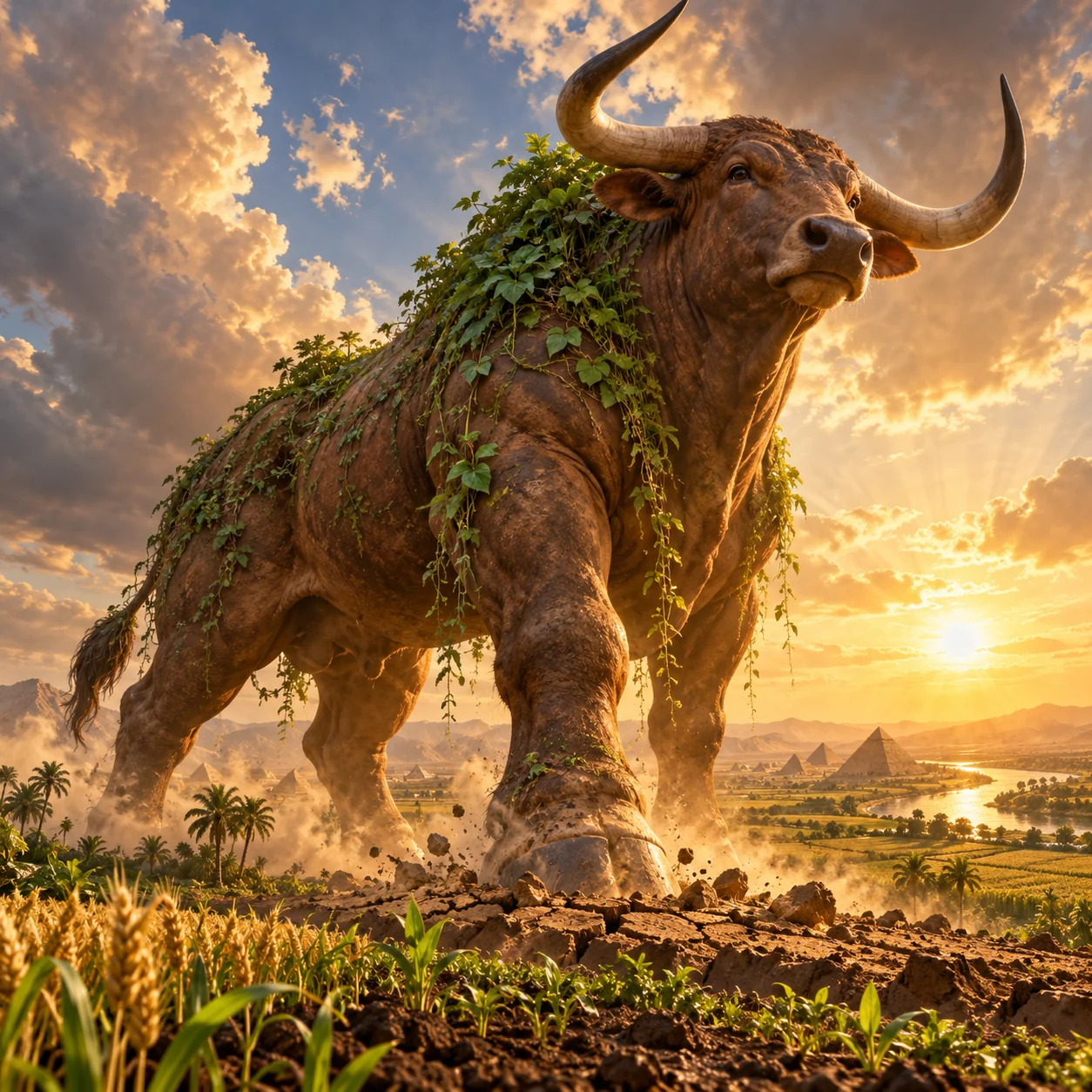
Geb adalah dewa bumi Mesir dan anggota Ennead Heliopolis. Tawanya dipercaya menghasilkan gempa bumi. Ia juga memungkinkan tanaman tumbuh. Penggambaran tertua yang disebut artikel berasal dari masa Djoser. Ia kadang digambarkan sebagai domba, banteng, atau buaya. Budge mengisahkan Geb dan Nut bersatu setiap malam, lalu Shu memisahkan mereka pada pagi hari. Nut adalah istrinya, sedangkan Shu dan Tefnut adalah orang tuanya. Anak-anaknya mencakup Osiris, Set, Isis, dan Nephthys. Shu memisahkan Geb dari Nut. Penggambarannya dapat memuat tanaman pada tubuhnya. World History Encyclopedia menegaskan Geb sebagai dewa bumi dan tumbuhan yang tumbuh. Budge mencatat gelar kepala turun-temurun para dewa bagi Geb. Menurut Budge, peran Geb berkembang menjadi dewa orang mati karena mereka dimakamkan di bumi. Budge menghubungkan Geb dan Nut dengan pemberian makanan bagi orang mati. Budge juga mencatat gelar ayah para dewa untuk Geb. Geb sering muncul sebagai raja ilahi purba Mesir; negeri itu diwarisi putranya Osiris dan cucunya Horus setelah banyak pertikaian dengan dewa pengacau Set. Dalam Kitab Sapi Surgawi, tersirat bahwa Geb adalah pewaris dewa matahari yang pergi, dan setelah menyerahkan takhta kepada Osiris ia berperan sebagai hakim dalam Pengadilan Ilahi para dewa. Menurut pandangan lama yang dikutip Budge, Geb dan Nut semula berada di perairan purba bersama Shu dan Tefnut, lalu Geb menjadi bumi dan Nut menjadi langit. World History Encyclopedia menceritakan bahwa Shu dan Tefnut melahirkan Geb dan Nut karena manusia tidak punya tempat tinggal. Geb dikaitkan dengan ular: ia dapat dianggap sebagai ayah ular-ular, dan dalam teks terjemahan Budge dewa yang berbicara berkata kepada Seb, "Biarlah perang dilancarkan terhadap cacing-cacingmu (atau ular-ularmu) yang ada di dalam dirimu". Ia juga dapat dipandang sebagai tanah subur sekaligus gurun tandus yang menampung orang mati atau membebaskan mereka dari makamnya, yang secara kiasan disebut "Geb membuka rahangnya". Sebagai dewa bawah tanah, ia dikaitkan dengan dunia bawah, air tawar, dan tumbuh-tumbuhan; jelai dikatakan tumbuh di rusuknya. Geb dan Nut bersama-sama membentuk batas tetap antara perairan purba dan dunia yang baru tercipta. Dalam sebuah himne untuk Ra yang dikutip Budge, tubuh Ra, yang menumbuhkan tanaman hijau pada musimnya, disebut Seb. Pada masa Mesir Yunani-Romawi, Geb disamakan dengan Titan Yunani Cronus karena kedudukan Cronus yang cukup mirip sebagai ayah para dewa. Persamaan ini terutama terbukti di Tebtunis, Fayum selatan, tempat Geb dan Cronus menjadi bagian dari versi lokal pemujaan Sobek, dewa buaya. Dalam pasal Kitab Orang Mati tentang perubahan wujud menjadi Ptah, sang penutur menyatakan dirinya ditetapkan sebagai pewaris ilahi Seb, penguasa bumi.
Geb is the Egyptian earth god and a member of the Heliopolitan Ennead. His laughter is believed to produce earthquakes. He also enables crops to grow. The earliest representation cited by the article dates to Djoser’s reign. He is sometimes depicted as a ram, bull or crocodile. Budge recounts Geb and Nut uniting every evening until Shu separates them in the morning. Nut is his wife and Shu and Tefnut are his parents. His children include Osiris, Set, Isis and Nephthys. Shu separates Geb from Nut. His representations may show plants on his body. World History Encyclopedia identifies Geb with earth and growing plants. Budge records the title hereditary chief of the gods for Geb. According to Budge, Geb’s role develops into a god of the dead because they are buried in the earth. Budge connects Geb and Nut with providing food for the dead. Budge also records the title father of the gods for Geb. Geb often appears as a primeval divine king of Egypt whose land passed to his son Osiris and his grandson Horus after many conflicts with the disruptive god Set. The Book of the Heavenly Cow implies that Geb is heir to the departing sun god, and once he handed the throne to Osiris he served as a judge in the Divine Tribunal of the gods. In an old view reported by Budge, Geb and Nut at first lay in the primeval waters beside Shu and Tefnut, and Geb later became the earth and Nut the sky. World History Encyclopedia relates that Shu and Tefnut bore Geb and Nut because humans had nowhere to live. Geb is linked with snakes: he can be regarded as a father of snakes, and in a text Budge translates, the god who speaks calls Seb and asks that war be waged on the serpents ("worms") within him. He can also be regarded as both fertile earth and barren desert, which holds the dead or sets them free from their tombs, a figure of speech rendered as "Geb opening his jaws". As a chthonic deity he is tied to the underworld, fresh waters and vegetation, and barley is said to grow on his ribs. Together, Geb and Nut formed the lasting boundary between the primeval waters and the newly made world. In a hymn to Ra quoted by Budge, the body of Ra, who brings forth green things in their season, is called Seb. Egyptians of the Greco-Roman age identified Geb with the Greek titan Cronus because Cronus held a rather similar place as father of the gods. This equation is especially well attested at Tebtunis in the southern Fayyum, where Geb and Cronus belonged to a local version of the cult of Sobek, the crocodile god. In the Book of the Dead chapter on transformation into Ptah, the speaker says he has been appointed divine heir of Seb, lord of the earth, and its protector.
Konteks budaya
Budge juga mencatat gelar ayah para dewa untuk Geb.
Budge also records the title father of the gods for Geb.
Fakta utama
- Budaya / Culture
- Mitologi Mesir Kuno
- Kawasan / Region
- Afrika
- Era
- The oldest representation dates from the reign of King Djoser, Third Dynasty
- Klasifikasi / Classification
- Deity
Nama lain / Alternate names
Seb
Tahukah kamu? / Did you know?
Jelai dikatakan tumbuh di rusuk Geb, yang digambarkan dengan tanaman dan bercak hijau di tubuhnya.
Barley is said to grow on the ribs of Geb, who was depicted with plants and green patches on his body.