Osiris
Ringkasan
Osiris adalah dewa Mesir kuno, penguasa dunia bawah dan hakim orang mati, suami Isis yang dibunuh Set lalu dihidupkan kembali oleh Isis.
Osiris is the ancient Egyptian god who rules the underworld and judges the dead, husband of Isis, murdered by Set and revived by Isis.
Kisah dan tradisi
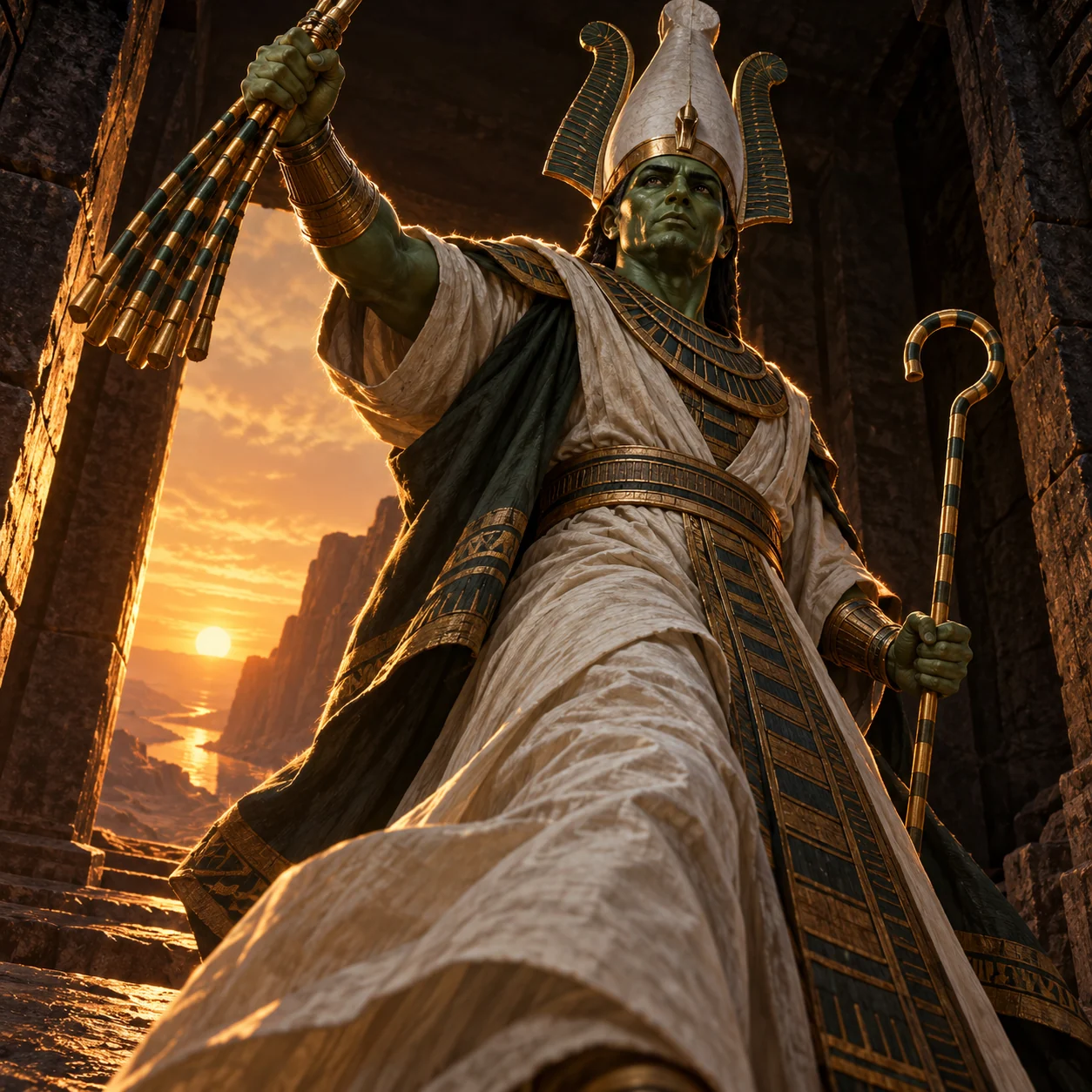
Dalam kepercayaan Mesir kuno, Osiris adalah Penguasa Dunia Bawah dan Hakim Orang Mati, suami sekaligus saudara Isis, dan salah satu dewa terpenting. Ia putra sulung Geb (bumi) dan Nut (langit). Namanya, Osiris, adalah bentuk Latin dari Usir yang ditafsirkan sebagai "perkasa", meskipun etimologinya disebut tidak pasti. Ia juga dikenal sebagai Wennefer, "Sang Indah", dan Khentiamenti, "Yang Terdepan di antara Orang Barat". Menurut mitos utamanya, Osiris sebagai putra sulung memerintah sebagai Penguasa Bumi dengan Isis sebagai ratunya, dan memberi rakyat Mesir hukum, budaya, ajaran agama, dan pertanian. Saudaranya, Set, membuat peti mati seukuran tubuhnya; ketika Osiris berbaring di dalamnya, Set menutup dan menguncinya lalu melemparkannya ke Sungai Nil. Set kemudian mencincang jasadnya, tetapi Isis menghidupkannya kembali dan mengandung Horus. Osiris yang tidak utuh tak lagi dapat memerintah orang hidup dan mundur ke alam baka sebagai Penguasa dan Hakim Orang Mati. Horus kemudian bertempur melawan Set. Osiris sering digambarkan dalam wujud mumi atau dibungkus kain kafan dengan hanya kepala dan tangan terlihat, memegang tongkat gembala dan cambuk, lambang kekuasaan raja; kedua benda itu mula-mula adalah lambang Osiris sebelum identik dengan firaun. Sebagai dewa hidup ia tampil sebagai pria tampan berpakaian kerajaan dengan mahkota atef. Kulitnya sering hitam atau hijau, melambangkan lumpur subur Nil dan pembaruan, dan ia dikaitkan dengan lambang djed serta burung Bennu. Dalam wujud mumi, ia turun ke dunia bawah dan, menurut keterangan museum, bergabung dengan dewa matahari Re setiap malam agar matahari terlahir kembali. Abydos adalah pusat pemujaan Osiris, dan orang ingin dimakamkan sedekat mungkin dengannya. Festival Surutnya Nil memperingati kematiannya dan Festival Pilar Djed merayakan kebangkitannya; biji-bijian yang tumbuh dari kebun Osiris melambangkan kebangkitan itu. Raja-raja Mesir mengidentifikasi diri dengan Osiris setelah mati, dan ia dianggap hakim orang mati yang pengasih, pemaaf, dan adil. Ia dianggap menegakkan kerajaan serta tatanan alam dan hukum kehidupan. Pemujaannya berlangsung dari sesaat sebelum Periode Dinasti Awal hingga Dinasti Ptolemeus, dan kultus misterinya menyebar sebagai Kultus Isis. Plutarch menulis versi Yunani kisah ini: Osiris lahir pada hari pertama dari hari-hari tambahan, dan sebagai raja ia mengajar rakyat menggunakan biji-bijian dan membuat hukum bagi mereka. Dalam versinya, Typhon menyusun persekongkolan dengan tujuh puluh dua sekutu, lalu mencabik jasad Osiris menjadi empat belas bagian. Osiris kemudian keluar dari dunia bawah untuk melatih Horus berperang. Plutarch juga menyamakan Osiris dengan Bacchus dan menyebut Sungai Nil sebagai pancaran Osiris.
In ancient Egyptian religion Osiris is the Lord of the Underworld and Judge of the Dead, brother-husband of Isis, and one of the most important gods. He is the firstborn of Geb (earth) and Nut (sky). His name, Osiris, is the Latinized form of Usir, interpreted as "powerful" or "mighty", although its etymology is also described as uncertain. He was also known as Wennefer, "The Beautiful One", and Khentiamenti, "The Foremost of the Westerners". In his central myth, Osiris, as firstborn, rules as Lord of the Earth with Isis as his queen and gives the people of Egypt laws, culture, religious instruction, and agriculture. His brother Set has a coffin made to his measure; when Osiris lies down in it, Set shuts and fastens the lid and throws it into the Nile. Set later hacks the body to pieces, but Isis revives him and conceives Horus. Incomplete, Osiris can no longer rule the living and withdraws into the afterlife as Lord and Judge of the Dead. Horus later battles Set. Osiris is often shown as a mummy, wrapped in a shroud from which only the head and hands emerge, holding the crook and flail, symbols of kingship that were first Osiris' symbols before becoming synonymous with pharaohs. As a living god he appears as a handsome man in royal dress wearing the atef crown. His skin is often black or green, symbolizing the fertile mud of the Nile and regeneration, and he is associated with the djed symbol and the Bennu bird. In mummy form he descends to the underworld and, according to the museum account, merges with the sun god Re each night so that the sun can be reborn. Abydos was the cult center of Osiris, and people wanted to be buried as close to him as possible. The festival of the Fall of the Nile commemorated his death and the Djed Pillar Festival celebrated his resurrection; the grain sprouting from an Osiris garden symbolized that rising. Egypt's kings identified with Osiris in death, and he was regarded as a merciful, forgiving, and just judge of the dead. He was credited with establishing kingship and the natural order and law of life. His worship ran from shortly before the Early Dynastic Period to the Ptolemaic Dynasty, and his mystery cult spread as the Cult of Isis. Plutarch records a Greek version of the story: Osiris is born on the first of the added days, and as king teaches the people the use of grain and makes laws for them. In his account Typhon plots with seventy-two accomplices and then tears Osiris's body into fourteen parts. Osiris later comes out of the underworld to train Horus for war. Plutarch also equates Osiris with Bacchus and calls the Nile the efflux of Osiris.
Konteks budaya
Menurut sumber, mitos Osiris mewujudkan sebagian nilai terpenting budaya Mesir: keselarasan, ketertiban, hidup abadi, dan rasa syukur.
According to the source, the Osiris myth carried several central cultural values of Egypt: harmony, order, eternal life, and gratitude.
Fakta utama
- Budaya / Culture
- Mitologi Mesir Kuno
- Kawasan / Region
- Afrika
- Negara / Country
- Egypt
- Era
- Worshipped from shortly before the Early Dynastic Period (c. 3150-2613 BCE) to the Ptolemaic Dynasty (323-30 BCE).
- Klasifikasi / Classification
- Deity
- Habitat
- Underworld
- Kemampuan / Abilities
- Menghakimi orang mati, Memperbarui bumi dan memulihkan kehidupan, Menyatu dengan Re setiap malam, Mengutus utusan-iblis
Nama lain / Alternate names
Usir, Wennefer, Khentiamenti
Tahukah kamu? / Did you know?
Plutarch menjelaskan keberadaan banyak makam Osiris di Mesir lewat kisah bahwa Isis mengadakan pemakaman tersendiri bagi tiap anggota tubuhnya yang ia temukan.
Plutarch explains the many sepulchres of Osiris in Egypt through the story that Isis held a separate funeral for each part of his body as she found it.