Atum
Ringkasan
Atum adalah dewa primordial Mesir yang menjadi asal segala sesuatu.
Atum is an Egyptian primordial god from whom everything arises.
Kisah dan tradisi
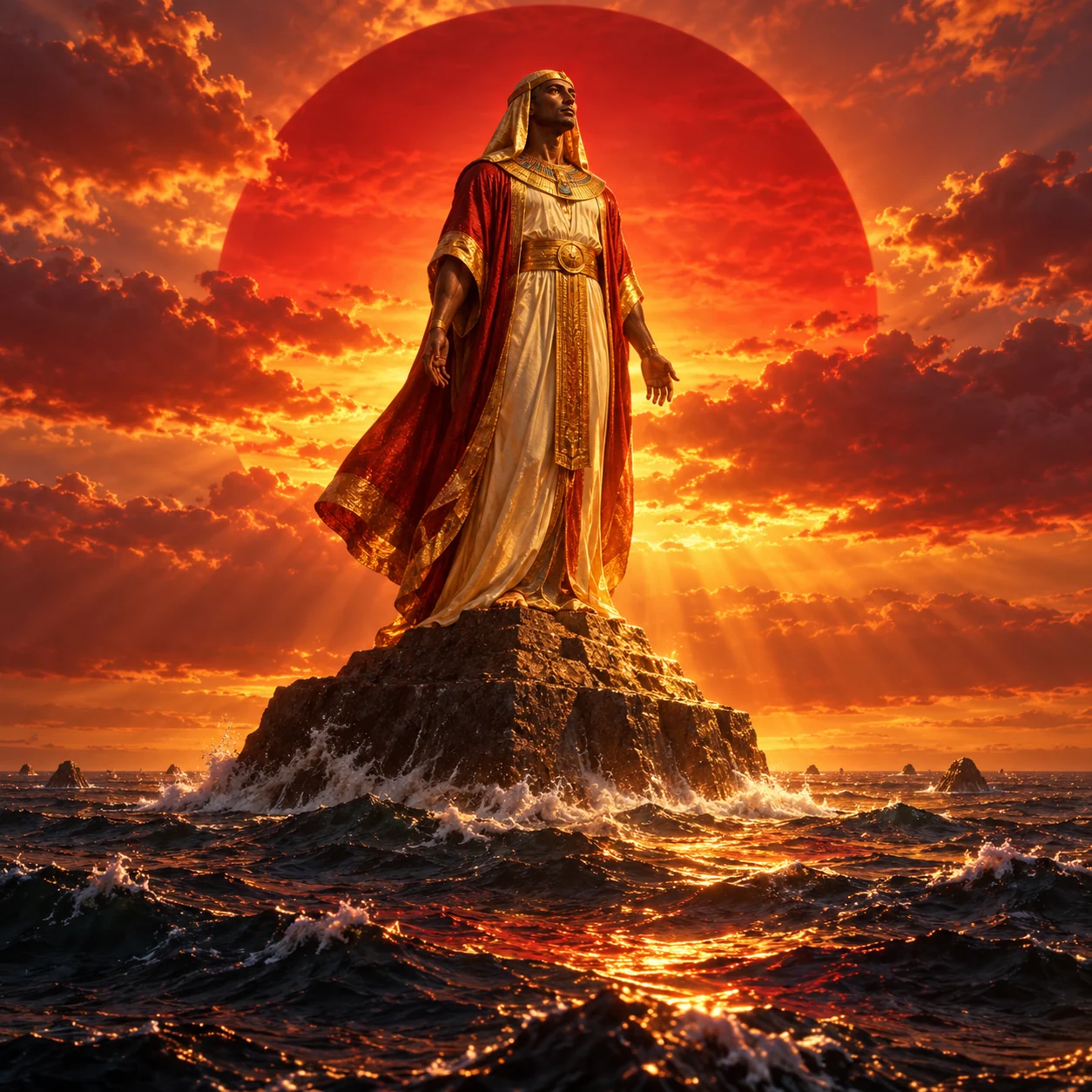
Atum adalah dewa primordial Mesir yang menjadi asal segala sesuatu. Ia menciptakan dirinya sendiri. Ia adalah ayah Shu dan Tefnut. Atum erat terkait matahari senja. Namanya dikaitkan dengan kata kerja yang berarti melengkapi atau menyelesaikan. Teks Piramida memadukannya dengan Ra sebagai Ra-Atum. Teologi Memphis mengisahkan Ptah menciptakan Atum melalui pikiran dan ucapan. Dalam kosmogoni Heliopolis ia muncul dari air primordial pada benben. Ia dipercaya mengangkat jiwa raja dari piramida ke langit berbintang. Teks Peti Mati menggambarkan Atum dan Osiris bertahan sebagai ular pada akhir alam semesta. Sumber ini menempatkan Atum sebagai dewa pertama Ennead. Ia memakai daya magis Heka dalam penciptaan. Ia juga disebut pencipta umat manusia. Budge membedakan Atum sebagai penutup hari dari Ptah sebagai pembuka hari. Budge menyatakan bentuk manusia Atum dikenal pada masa raja Dinasti Kelima. Atum penting bagi bangsa Mesir kuno hampir sepanjang sejarah Mesir: ia dipercaya sudah hadir dalam gagasan keagamaan sejak masa pradinasti, makin menonjol pada masa Kerajaan Lama, dan terus dipuja pada masa Kerajaan Tengah dan Kerajaan Baru walaupun tertutup oleh Ra. Pusat pemujaannya adalah kota Heliopolis (Annu atau Iunu). Satu-satunya sisa Heliopolis yang masih ada adalah obelisk Kuil Ra-Atum di Al-Masalla, Kairo, yang didirikan oleh Senusret I dari Dinasti Kedua Belas. Budge menyebut Temu atau Atmu sebagai dewa agung Heliopolis dan menyebut para imam kota itu menempatkannya di kepala kelompok sembilan dewa. Menurut pandangan Heliopolis, Atum semula ada di dalam telurnya di perairan purba lalu menjadi sumber segala sesuatu yang tercipta sesudahnya. Tentang cara ia menghasilkan Shu dan Tefnut, satu teks menyebut bibir Atum, sedangkan World History Encyclopedia menyebut kemungkinan bersatu dengan bayangannya atau meludah. Ketika kedua anaknya lenyap ke dalam kegelapan perairan purba, Atum mengirim Mata Ra untuk mencari mereka, dan air mata gembiranya saat mereka kembali menjadi manusia pertama. World History Encyclopedia juga menyebut bahwa Atum marah oleh kedekatan Geb dan Nut sehingga memisahkan mereka. Atum biasanya digambarkan berwujud manusia dengan wig Tripartit ilahi atau Mahkota Ganda yang menegaskan kaitannya dengan kerajaan. Ia kadang juga ditampilkan sebagai ular, wujud yang akan ia kembalikan pada akhir siklus penciptaan, dan sesekali sebagai luwak, singa, banteng, kadal, atau kera. Dalam Kitab Orang Mati, dewa matahari Atum disebut naik dari air kekacauan dalam rupa ular. Atum adalah dewa pra-keberadaan dan pasca-keberadaan, dan Khepri-Atum mencakup matahari terbit dan terbenam sehingga mencerminkan seluruh siklus pagi dan petang.
Atum is an Egyptian primordial god from whom everything arises. He creates himself. He is the father of Shu and Tefnut. Atum is closely associated with the evening sun. His name is connected with a verb meaning to complete or finish. The Pyramid Texts combine him with Ra as Ra-Atum. Memphite theology tells of Ptah creating Atum through thought and speech. In Heliopolitan cosmogony he emerges from primordial waters on the benben mound. He is believed to lift a king’s soul from his pyramid to the starry heavens. The Coffin Texts depict Atum and Osiris surviving as serpents at the universe’s end. This source places Atum as the first god of the Ennead. He uses Heka’s magical power in creation. He is also described as creator of humankind. Budge distinguishes Atum as closer of the day from Ptah as opener of the day. Budge states that Atum’s human form was known under Fifth-Dynasty kings. Atum mattered to the ancient Egyptians for most of Egyptian history: he is believed to have been present in religious thought from predynastic times, grew more prominent in the Old Kingdom, and kept being worshiped in the Middle Kingdom and the New Kingdom even though Ra overshadowed him. The center of his worship was the city of Heliopolis (Annu or Iunu). The only surviving remnant of Heliopolis is the obelisk of the Temple of Ra-Atum in Al-Masalla, Cairo, raised by Senusret I of the Twelfth Dynasty. Budge calls Temu or Atmu the great god of Heliopolis and says the priests of that city placed him at the head of the company of nine gods. In the Heliopolitan view, Atum first lay in his egg within the primeval waters and then became the source of everything created after him. As for how he produced Shu and Tefnut, one text names the lips of Atum, while World History Encyclopedia gives the possibilities of union with his shadow or spitting. When his two children vanished into the darkness of the primeval waters, Atum sent the Eye of Ra to find them, and the tears of joy he shed on their return became the first human beings. World History Encyclopedia also says that Atum, angered by the closeness of Geb and Nut, separated them. Atum is usually shown in human form with the divine Tripartite wig or the Double Crown, which stresses his link with kingship. He is at times portrayed as a snake, the shape he reverts to when the creative cycle ends, and now and then as a mongoose, lion, bull, lizard or ape. In the Book of the Dead the sun god Atum is said to rise from the chaos-waters as a snake. Atum is the god of pre-existence and post-existence, and Khepri-Atum spans sunrise and sunset, mirroring the whole cycle of morning and evening.
Konteks budaya
Budge menyatakan bentuk manusia Atum dikenal pada masa raja Dinasti Kelima. Budge menyebut para imam Heliopolis menempatkan Temu di kepala kelompok sembilan dewa, dan teks terjemahannya menyebut Tem sebagai Bapa para dewa.
Budge states that Atum’s human form was known under Fifth-Dynasty kings. Budge says the priests of Heliopolis placed Temu at the head of the company of nine gods, and a text he translates calls Tem the Father of the gods.
Fakta utama
- Budaya / Culture
- Mitologi Mesir Kuno
- Kawasan / Region
- Afrika
- Era
- Believed to have been present in ideology as early as predynastic times
- Klasifikasi / Classification
- Deity
Nama lain / Alternate names
Temu, Atmu, Tem
Tahukah kamu? / Did you know?
Menurut World History Encyclopedia, nama Nefertum berarti "Atum yang Indah", dan dewa itu pada mulanya merupakan salah satu aspek Atum.
According to World History Encyclopedia, the name Nefertum means "Beautiful Atum", and the god was originally an aspect of Atum.