Horus
Ringkasan
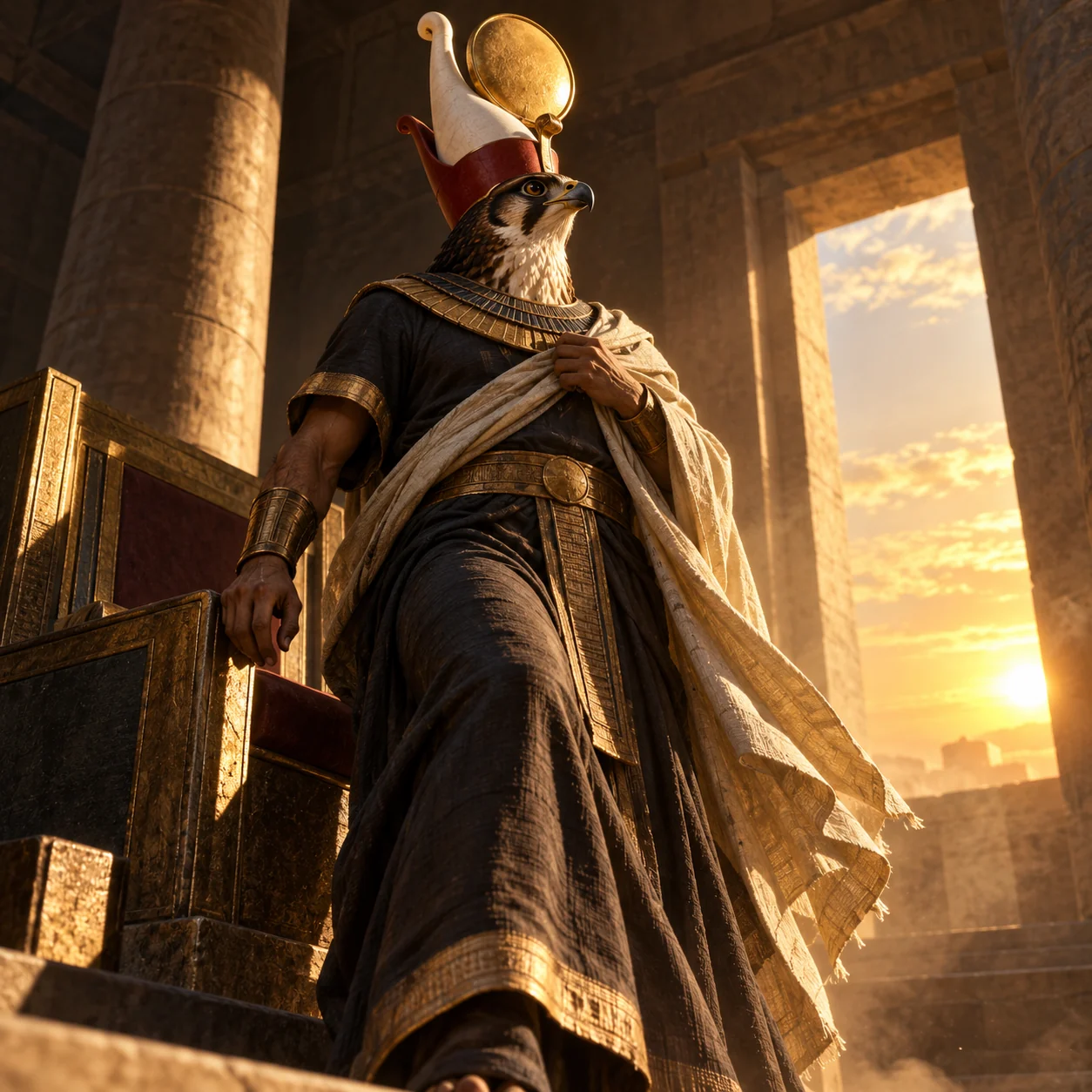
Horus adalah dewa langit Mesir kuno berwujud elang, putra Isis dan Osiris yang mengalahkan Set dan dikaitkan dengan kerajaan.
Horus is an ancient Egyptian falcon-linked sky god, son of Isis and Osiris, who defeated Set and was bound to kingship.
Kisah dan tradisi
Horus adalah nama dewa langit dalam mitologi Mesir kuno yang terutama merujuk pada dua dewa: Horus Tua dan Horus Muda. Horus Tua disebut sebagai anak bungsu dari lima dewa pertama dan saudara Osiris, Isis, Set, dan Nephthys, sedangkan Horus Muda adalah putra Osiris dan Isis yang mengalahkan Set serta memulihkan ketertiban negeri. Horus Tua juga disebut Horus Agung, atau Harwer dan Haroeris dalam bahasa Mesir. Dalam kisah tentang Horus Tua, Horus lahir dari persatuan Geb dan Nut, dan diberi tanggung jawab atas langit, khususnya matahari. Ia juga digambarkan sebagai dewa pencipta dan pelindung yang baik hati. Sebagai elang, ia dibayangkan dapat terbang jauh dari Ra lalu kembali membawa kabar penting. Dalam versi lain, Horus adalah putra Hathor, dan dalam versi lainnya Hathor adalah istrinya. Horus Muda dikaitkan terutama dengan matahari dan juga bulan. Ia dikenal sebagai pelindung kerajaan Mesir, pembalas kezaliman, pembela ketertiban, pemersatu dua negeri, dan dewa perang yang diseru para penguasa sebelum bertempur. Lambangnya adalah Mata Horus dan elang. Kelak ia berpadu dengan Ra menjadi Ra-Harahkhte, dewa matahari berkepala elang. Britannica 1911 menyebutnya dewa surya yang sangat awal muncul dalam lingkaran dewa Osiris dan lawan Set. Menurut Mitos Osiris, Isis mengandung Horus dan melahirkannya seorang diri di rawa-rawa Delta. Pertarungan Horus melawan Set paling terkenal dalam naskah The Contendings of Horus and Set, yang menggambarkannya sebagai pengadilan di hadapan Ennead. Dalam pertarungan itu Horus kehilangan sebelah mata tetapi menang setiap kali. Setelah mengalahkan Set, ia dikenal sebagai Horu-Sema-Tawy, dan raja-raja Mesir memilih "Nama Horus" saat penobatan. Horus Muda juga disebut Horus Anak; dalam tradisi Yunani ia dikenal sebagai Harpokrates. Horus dikaitkan dengan akhirat melalui Empat Putranya yang melindungi organ vital orang yang meninggal, dan dalam adegan penghakiman ia memperkenalkan almarhum kepada Osiris. Ia disembah antara lain di Edfu dan Kom Ombo. Orang Yunani menyamakannya dengan Apollo. Firaun Nectanebo II sering menegaskan hubungan yang sangat dekat, bahkan penyatuan, antara dirinya dan Horus.
Horus is a sky god of ancient Egyptian religion, and the name chiefly covers two deities: Horus the Elder and Horus the Younger. The Elder is described as the last born of the first five gods and as a sibling of Osiris, Isis, Set, and Nephthys, while the Younger is the son of Osiris and Isis who defeated Set and restored order to the land. The Elder is also called Horus the Great, or Harwer and Haroeris in Egyptian. In the account of Horus the Elder, he was born of the union of Geb and Nut and was given charge of the sky, specifically the sun. He is also depicted as a creator god and benevolent protector. As a falcon he was imagined flying far from Ra and returning with vital information. In another version Horus is the son of Hathor, and in others Hathor is his wife. Horus the Younger was associated mainly with the sun and also with the moon. He was known as a protector of Egypt's royalty who avenged wrongs, upheld order, united the two lands, and, as a war god, was called upon by rulers before battle. His symbols are the Eye of Horus and the falcon. He later combined with Ra as Ra-Harahkhte, a falcon-headed sun god. Britannica 1911 calls him a solar divinity who appears very early in the Osiris cycle and an opponent of Set. In the Osiris myth Isis conceived Horus and gave birth to him alone in the Delta swamps. The contest between Horus and Set is best known from The Contendings of Horus and Set, which presents it as a trial before the Ennead. In these battles Horus loses an eye but wins each time. After defeating Set he became known as Horu-Sema-Tawy, and Egyptian kings chose a "Horus Name" at their coronation. Horus the Younger was also called Horus the Child and became known as Harpocrates in Greek tradition. Through his Four Sons, who guarded the organs of the dead, Horus was tied to the afterlife, and in the judgment scene he presents the deceased to Osiris. He was worshipped at places including Edfu and Kom Ombos. The Greeks equated him with Apollo. The pharaoh Nectanebo II often claimed a very close connection, even a merging, between himself and Horus.
Konteks budaya
Sejak Periode Dinasti Awal Horus dikaitkan dengan raja Mesir, dan raja-raja memilih "Nama Horus" saat penobatan karena Horus dipandang sebagai pemulih ketertiban yang mengalahkan Set.
From the Early Dynastic Period Horus was linked with the king of Egypt, and kings chose a "Horus Name" at their coronation because Horus was seen as the one who restored order by defeating Set.
Fakta utama
- Budaya / Culture
- Mitologi Mesir Kuno
- Kawasan / Region
- Afrika
- Negara / Country
- Egypt
- Era
- His name is attested from the beginning of the Dynastic Period; predynastic rulers were called "Followers of Horus".
- Klasifikasi / Classification
- Deity
- Habitat
- Sky
- Kemampuan / Abilities
- Terbang sebagai elang, Pelindung kerajaan dan pembela ketertiban, Dewa perang
Nama lain / Alternate names
Hor, Harwer, Haroeris, Horus the Great, Horus the Child, Horu-Sema-Tawy
Tahukah kamu? / Did you know?
Penguasa Periode Pradinasti Mesir disebut "Pengikut Horus", dan raja-raja kemudian memilih "Nama Horus" saat penobatan.
Rulers of Egypt's Predynastic Period were called "Followers of Horus", and later kings chose a "Horus Name" at their coronation.