Gloucester sea serpent Gloucester Sea Serpent
Ringkasan
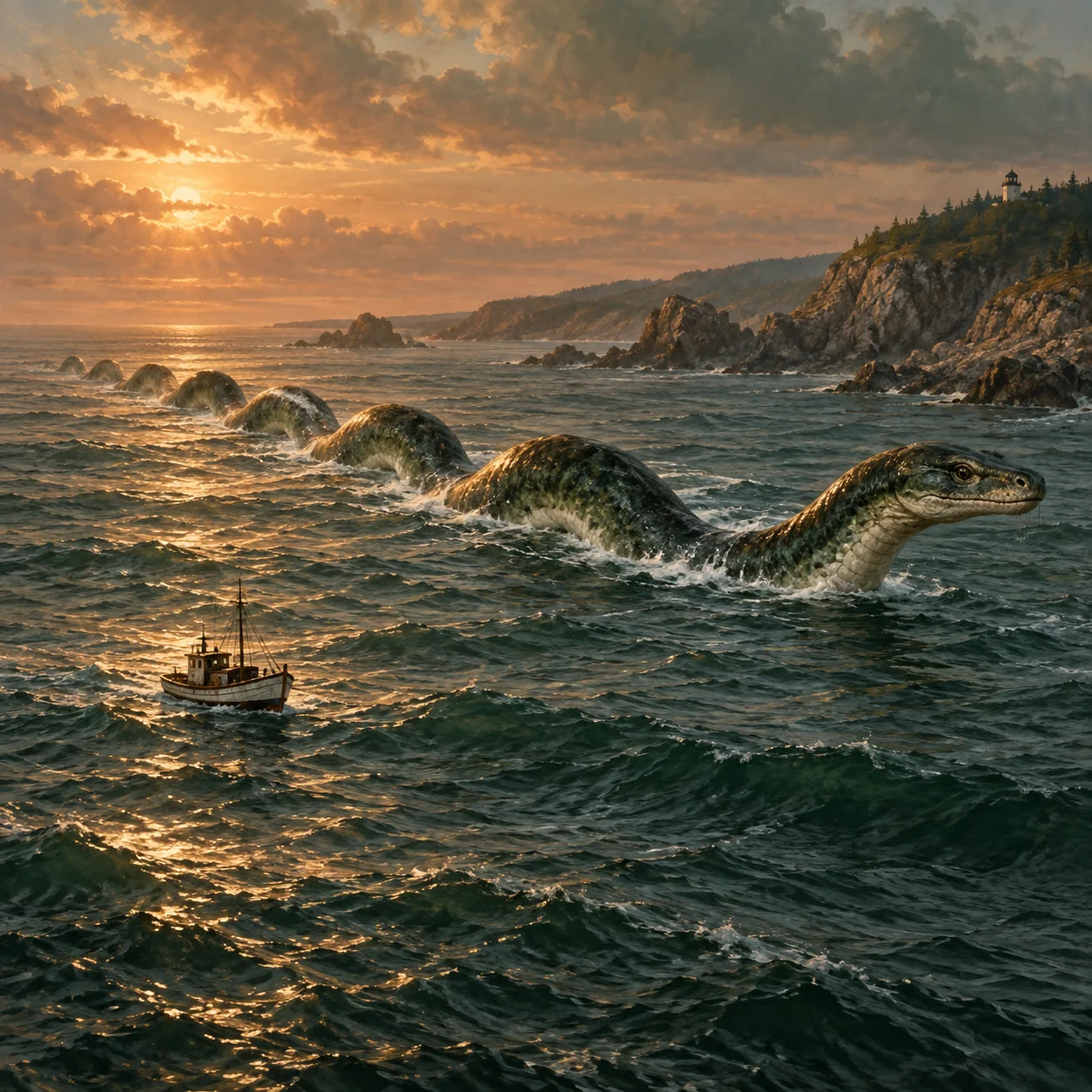
Ular laut Gloucester adalah makhluk legendaris yang dilaporkan terlihat di lepas pantai Gloucester, Massachusetts, terutama sejak Agustus 1817. Ia digambarkan sebagai makhluk besar mirip ular dengan punuk di punggungnya.
The Gloucester sea serpent is a legendary creature reportedly seen off the coast of Gloucester, Massachusetts, mainly from August 1817. It is pictured as a huge, snake-like animal with a humped back.
Kisah dan tradisi
Ular laut Gloucester adalah makhluk legendaris yang dilaporkan terlihat di sekitar dan di lepas pantai Gloucester, Massachusetts, serta kawasan Cape Ann. Masa puncak laporan dimulai pada Agustus 1817 dan berlanjut hingga 1818–1819, dan catatan penampakan paling awal di lepas Cape Ann berasal dari 1638. Makhluk ini digambarkan sebagai makhluk besar mirip ular dengan punuk di punggungnya. Gambaran saksi beragam: ada yang melihat makhluk panjang seperti ular, ada yang melihat hewan berpunuk berkepala seperti kuda atau anjing laut. Menurut Skeptoid, hampir semua laporan menggambarkan deretan punuk panjang, dan beberapa menyebut "sengat" seperti tombak di depan kepalanya. Pada akhir 1817 telah terbit delapan belas laporan, lalu jumlahnya menurun dengan penampakan terbit terakhir yang diketahui pada 1819. Berbagai penjelasan diajukan: Joe Nickell menyimpulkan makhluk itu narwhal, Karl Brandt mengusulkan paus sperma yang terkena harpun, dan Skeptoid mengajukan fenomena gelombang. Pada 1819 pula sebuah lakon menyindir laporan-laporan tersebut.
The Gloucester sea serpent is a legendary animal that people reported near the shore and in the waters of Gloucester, Massachusetts, and around Cape Ann. The heyday of reports began in August 1817 and continued into 1818–1819, and the earliest recorded sighting off Cape Ann dates to 1638. It is pictured as a huge, snake-like animal with a humped back. Witness descriptions varied: some saw a long snake-like creature, others a hump-backed animal with a head like a horse or a seal. According to Skeptoid, nearly all reports described a long line of humps, and some mentioned a spear-like "sting" at the front of the head. By the end of 1817 eighteen accounts had been published, after which they declined, with the last known published sighting in 1819. Various explanations have been offered: Joe Nickell concluded it was a narwhal, Karl Brandt suggested harpooned sperm whales, and Skeptoid proposed a wave phenomenon. A play in 1819 also lampooned the reports.
Fakta utama
- Budaya / Culture
- Tradisi Amerika Serikat
- Kawasan / Region
- Amerika Utara Pribumi
- Negara / Country
- United States
- Era
- heyday of sightings August 1817 to 1819; earliest recorded sighting 1638
- Klasifikasi / Classification
- Aquatic
- Habitat
- Water