Graoully
Ringkasan
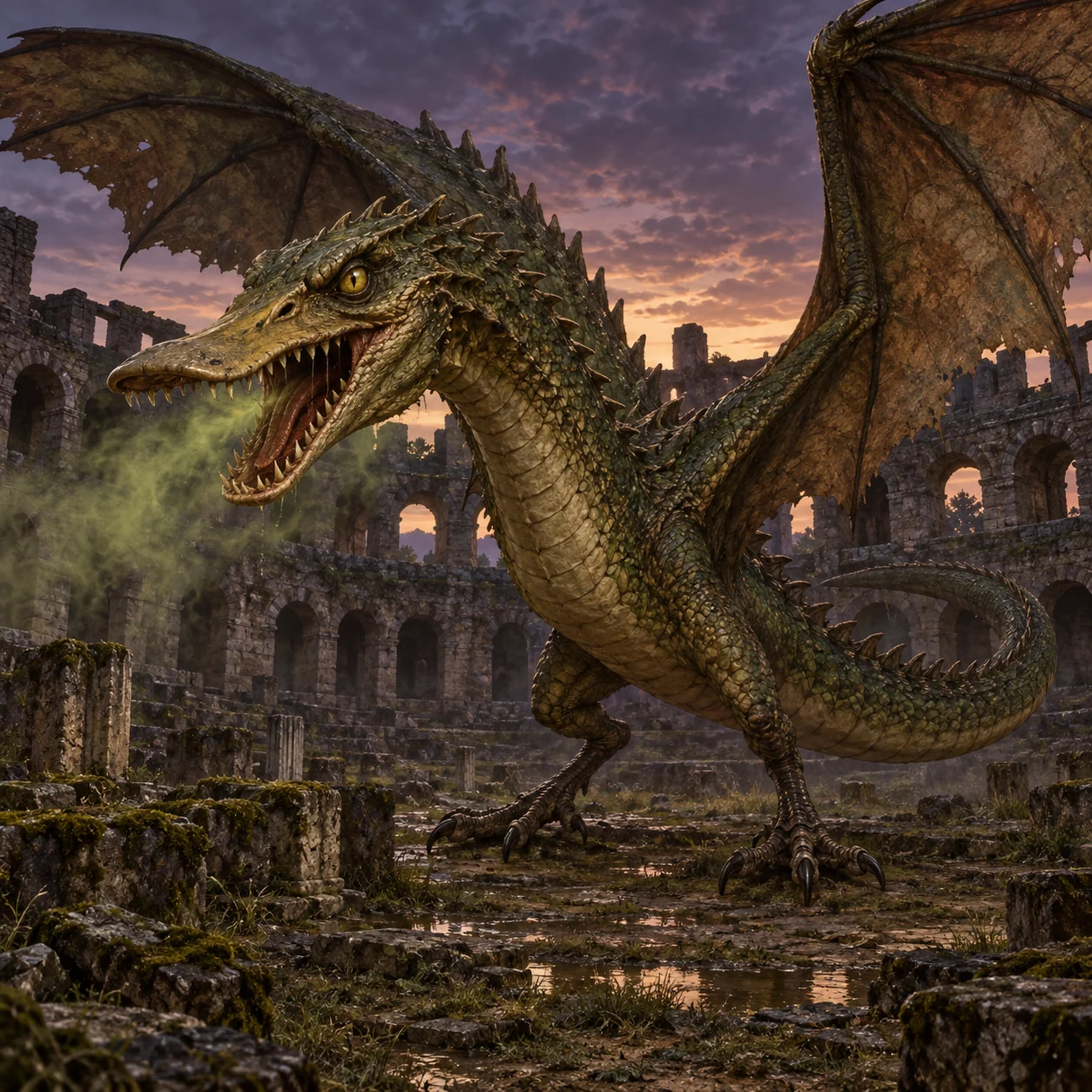
Graoully adalah naga legenda Metz yang tinggal di amfiteater Romawi dan meracuni kota sampai dikalahkan Santo Klemens, uskup pertama Metz.
Graoully is a legendary dragon of Metz that lived in the Roman amphitheatre and poisoned the city until Saint Clement, its first bishop, overcame it.
Kisah dan tradisi
Graoully adalah naga dalam cerita rakyat Metz yang tinggal di amfiteater Romawi bersama banyak ular; napas berbisa mereka membuat kota tak bisa dimasuki. Santo Klemens mengangkat salib, mengikat Graoully dengan stolanya, dan menuntunnya ke Sungai Seille, tempat menurut satu versi monster itu ditelan bumi; versi lain menyebut Klemens menusuknya dengan tombak. Versi pertama legenda ini dari akhir abad ke-10 dan melambangkan kemenangan Kristen atas paganisme. Namanya mungkin dari grouiller, "berkerumun", atau dari bahasa Jerman gräulich, "mengerikan". Patungnya diarak di Metz sampai abad ke-19, nama Rue Taison dikaitkan dengan peringatan tentangnya, dan ia menjadi lambang kota serta klub FC Metz sampai 2021.
Graoully is a dragon of Metz folklore that lived in the Roman amphitheatre with many serpents whose venomous breath sealed off the city. Saint Clement raised his cross, bound Graoully with his stole and led it to the River Seille, where in one version the earth swallowed it; other versions have him spear it. The legend's first version dates from the late 10th century and symbolises Christianity's victory over paganism. Its name may come from grouiller, 'to swarm', or German gräulich, 'horrible'. Its effigy was paraded in Metz until the 19th century, the Rue Taison is linked to a warning about it, and it became a city symbol and the FC Metz emblem until 2021.
Fakta utama
- Budaya / Culture
- Tradisi Prancis
- Kawasan / Region
- Eropa
- Klasifikasi / Classification
- Dragon
Nama lain / Alternate names
Graouli, Grauli
Makhluk terkait / Related beings
- Came-cruse (Camacrusa)
- Cheval Gauvin
- Cheval Mallet
- Coulobre
- Dahu
- Farfadet
- Ganipote
- Gargouille
- Grand'Goule (Grande Goule)