Nyx
Ringkasan
Nyx ialah dewi purba dan personifikasi malam dalam mitologi Yunani.
Nyx is a primordial goddess and personification of night in Greek mythology.
Kisah dan tradisi
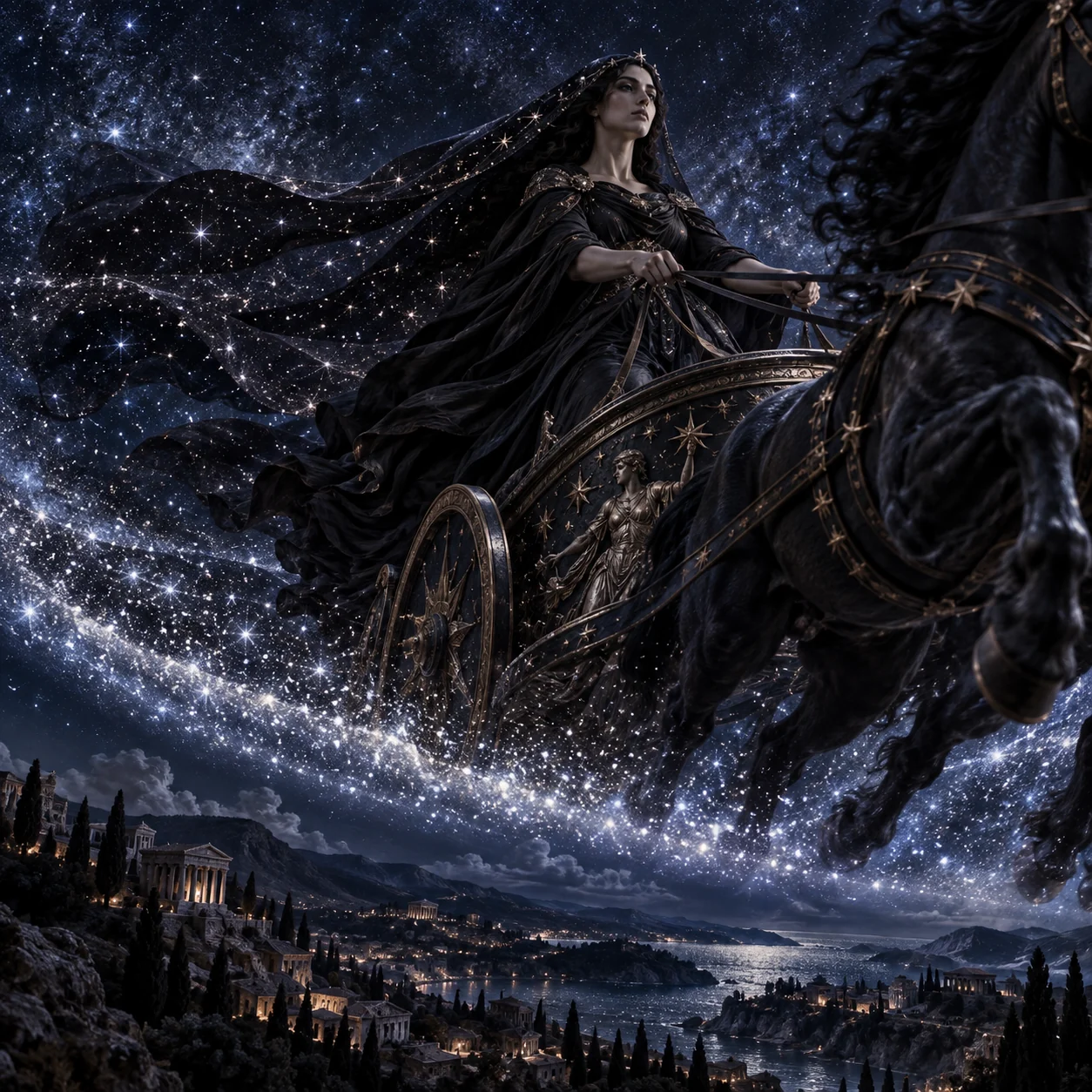
Dalam Theogony karya Hesiod, Malam lahir dari Chaos dan bersama Erebus melahirkan Aether serta Day. Nyx juga disebut melahirkan sejumlah roh, di antaranya Sleep, Death, Strife, dan Pain. Teks Hesiod sendiri menyebut Night melahirkan Doom, Fate, Death, Sleep, dan suku Dreams; tanpa pasangan ia juga melahirkan Blame, Woe, dan para Hesperides. Rumah Night yang suram berdiri terbungkus awan gelap, tempat Night dan Day saling menyapa di ambang pintu perunggu: ketika yang satu masuk, yang lain keluar. Di sana pula anak-anak Night, Sleep dan Death, memiliki tempat tinggal. Gambaran kuno menampilkan Nyx bersayap atau mengendarai kereta. Hemera, personifikasi Day, bergantian dengannya; keduanya tidak tinggal di rumah Tartarus pada waktu yang sama. Ia juga digambarkan berselubung hitam atau berbintang saat menaiki kereta. Pausanias menggambarkan ukiran yang menyebut Nyx sebagai pengasuh Thanatos dan Hypnos, dan sumber lain melukiskannya melayang dalam jubah hitam panjang sambil menggendong kedua putranya. Dalam kisah Iliad, Hypnos mengatakan bahwa Nyx melindunginya dari Zeus. Bukti pemujaannya di kuil sangat sedikit, meskipun Pausanias menyebut orakel Malam di Megara. Entri kamus klasik menyebut Homer menjuluki Nyx penakluk dewa dan manusia, dengan Zeus sendiri segan padanya. Hewan hitam, terutama ayam jantan hitam, dikatakan dikurbankan baginya. Pausanias juga mencatat bahwa orang Smyrna percaya pada dua Nemesis dan menyebut Nyx ibu mereka. Dalam tradisi Orfik, Phanes melahirkan Nyx dan keduanya kemudian memperanakkan Uranus; sebagian sarjana menduga Nyx mungkin dewa tertinggi dalam kepercayaan Orfik awal, dan salah satu fragmen menyebut Phanes menaruh tongkat kerajaan di tangannya. Dalam komedi Birds karya Aristophanes, Nyx bersayap hitam bertelur tanpa benih di kedalaman Erebos, dan Eros lahir dari telur itu. Dalam Eumenides karya Aeschylus, para Erinyes menyebut diri mereka anak-anak abadi Nyx.
In Hesiod's Theogony, Night comes from Chaos and with Erebus bears Aether and Day. Nyx also bears spirits including Sleep, Death, Strife, and Pain. Hesiod's own text has Night bear Doom, Fate, Death, Sleep and the tribe of Dreams, and, with no partner, Blame, Woe and the Hesperides. Her gloomy house stands wrapped in dark clouds, where Night and Day meet at the bronze threshold, one entering as the other leaves. The children of Night, Sleep and Death, have their dwellings there too. Ancient depictions show Nyx with wings or a chariot. Hemera, the personification of Day, alternates with her; they are never at home in Tartarus at the same time. She is also depicted with a black or starry veil while driving the chariot. Pausanias describes inscriptions naming Nyx the nurse of Thanatos and Hypnos, and other sources picture her floating in a long black robe while carrying her two sons. In the Iliad, Hypnos says Nyx protected him from Zeus. Evidence of temple worship is sparse, though Pausanias mentions an Oracle of Night in Megara. A classical dictionary entry says Homer calls her the subduer of gods and men, with Zeus himself in awe of her. Black animals, especially black cocks, were said to be sacrificed to her. Pausanias also records that the people of Smyrna believed in two Nemeses and called Nyx their mother. In Orphic tradition Phanes begets Nyx and the two then conceive Uranus; some scholars think Nyx may have been a supreme deity in early Orphic belief, and one fragment has Phanes place his sceptre in her hands. In Aristophanes' comedy Birds, black-winged Nyx lays a germless egg in the depths of Erebos, and Eros springs from it. In Aeschylus' Eumenides, the Erinyes call themselves the eternal children of Nyx.
Fakta utama
- Budaya / Culture
- Mitologi Yunani
- Kawasan / Region
- Eropa
- Klasifikasi / Classification
- Deity
Nama lain / Alternate names
Nox