Ichthyocentaur
Ringkasan
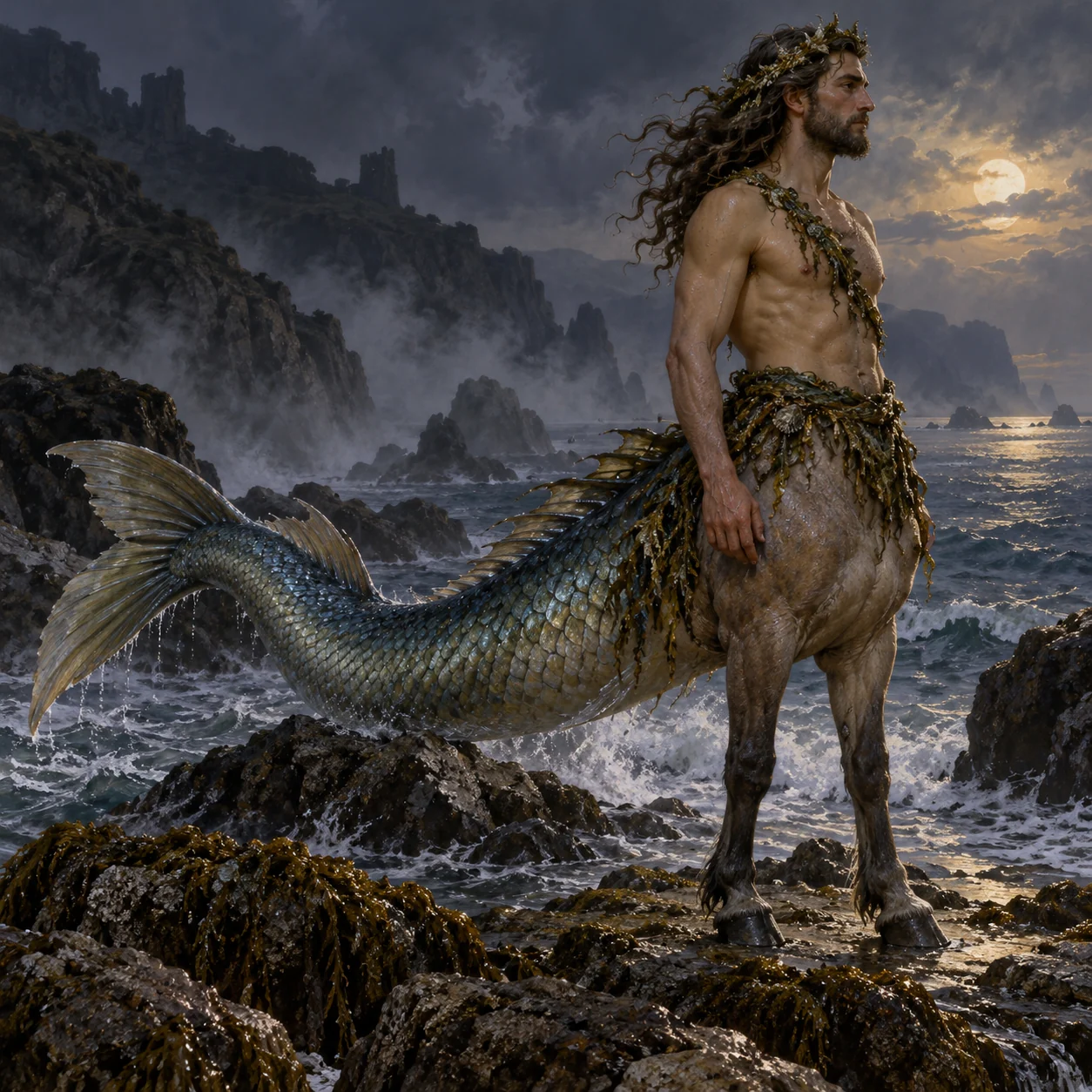
Ichthyocentaur adalah makhluk laut mirip centaur bertubuh atas manusia, bagian depan kuda, dan ekor ikan; Theoi menyebutnya sepasang dewa laut bernama Bythos dan Aphros.
The ichthyocentaur is a centaur-like sea being with a human upper body, a horse's forequarters and a fish's tail; Theoi describes a pair of sea gods named Bythos and Aphros.
Kisah dan tradisi
Ichthyocentaur adalah makhluk laut mirip centaur bertubuh atas manusia, bagian depan bawah dan kaki depan kuda, serta bagian belakang ikan yang berekor. Contoh tertuanya berasal dari abad ke-2 SM pada relief Altar Pergamon. Menurut Wikipedia, istilahnya baru muncul belakangan, dikaitkan dengan penulis Bizantium John Tzetzes pada abad ke-12, sehingga mereka juga disebut centaur laut. Theoi menyebut para Ikhthyokentauroi sebagai sepasang dewa laut, Bythos (Kedalaman Laut) dan Aphros (Buih Laut), dengan dahi bertanduk capit lobster. Mereka disebut saudara centaur Kheiron, dan dalam sebuah mosaik dari Zeugma keduanya mengusung kendaraan kerang dewi Aphrodite. Sebuah ensiklopedia menyebut ichthyocentaurus sebagai jenis Triton tertentu yang berkaki kuda. Theoi menambahkan bahwa centaur laut itu mungkin berasal dari dewa-dewa ikan dalam mitologi Syria yang membawa Ashtarte ke pantai setelah kelahirannya.
The ichthyocentaur is a centaur-like sea being: human above, with a horse's front half and forelegs, and the tailed rear half of a fish. Its oldest known example is from the 2nd century BC, among the Pergamon Altar friezes. According to Wikipedia the word is a late coinage credited to the Byzantine writer John Tzetzes in the 12th century, which is why they are also called sea-centaurs. Theoi describes the Ikhthyokentauroi as a pair of sea gods, Bythos (Sea-Depths) and Aphros (Sea-Foam), with brows crowned by lobster-claw horns. They are called brothers of the centaur Kheiron, and in a mosaic from Zeugma the two carry the cockle-shell craft of the goddess Aphrodite. An encyclopedia describes the ichthyocentaurus as a particular kind of Triton with the feet of a horse. Theoi adds that the sea-centaurs probably descend from the Syrian fish deities who brought Ashtarte to land after she was born.
Fakta utama
- Budaya / Culture
- Mitologi Yunani
- Kawasan / Region
- Eropa
- Klasifikasi / Classification
- Hybrid
- Habitat
- Water