Venus
Ringkasan
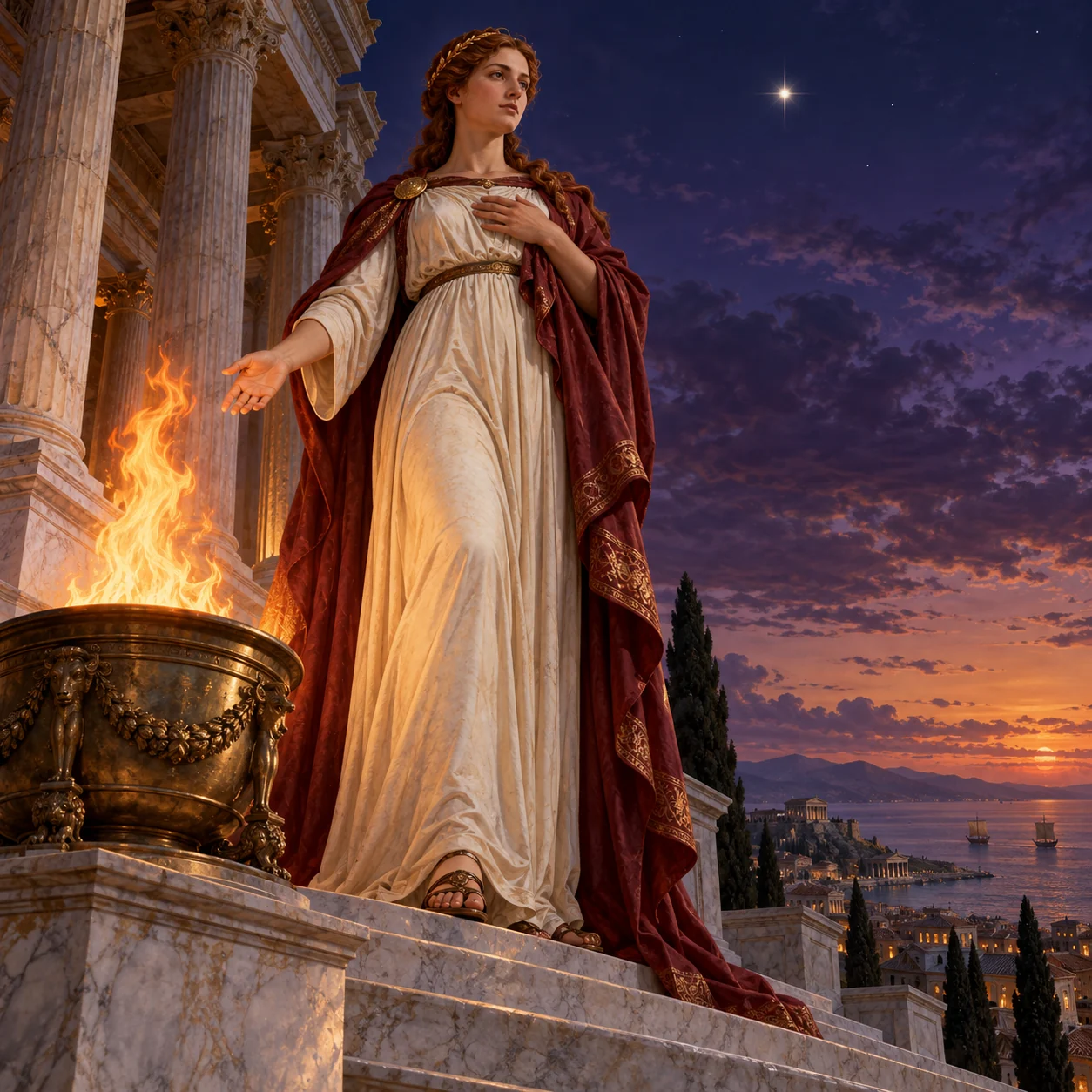
Venus adalah dewi Romawi cinta, kecantikan, kesuburan, kemakmuran, dan kemenangan, serta leluhur bangsa Romawi melalui putranya Aeneas.
Venus is a Roman goddess of love, beauty, fertility, prosperity, and victory, and in myth the ancestor of the Roman people through her son Aeneas.
Kisah dan tradisi
Dalam agama Romawi, Venus dipandang sebagai dewi cinta, kecantikan, hasrat, kesuburan, kemakmuran, dan kemenangan. Mitologi Romawi menyebut Aeneas sebagai putranya dan menghubungkannya dengan leluhur bangsa Romawi. Bangsa Romawi mengadaptasi kisah dan penggambaran Aphrodite Yunani untuk Venus, tetapi satu sumber menyebut Venus juga memiliki wewenang yang melampaui Aphrodite. Dalam kisah, Venus memiliki dua kekasih ilahi utama, yaitu suaminya Vulcan dan Mars. Dengan Mars ia dikatakan melahirkan Timor, Metus, Concordia, dan para Cupid, dan Vulcan pernah menjebak keduanya dengan jaring. Ia juga memiliki kekasih fana seperti Anchises, yang bersamanya ia memiliki putra Aeneas, dan Adonis. Pemujaan Venus di Roma mencakup banyak gelar. Kuil pertamanya tercatat pada 295 SM untuk Venus Obsequens, dan kuil serta pemujaan Venus Erycina dan Venus Verticordia kemudian didirikan untuk kaum plebeian. Bulannya adalah April, dengan festival seperti Veneralia untuk Venus Verticordia. Pada akhir Republik, tokoh-tokoh seperti Sulla, Pompeius, dan Julius Caesar mengklaim restunya. Dalam seni, Venus sering digambarkan telanjang, dan banyak patungnya mirip dengan Aphrodite dari Knidos dan Venus de Milo. Dalam Metamorphoses Ovidius ia hadir pada festivalnya di Siprus ketika Pygmalion berdoa, dan ia terluka oleh anak panah putranya sebelum jatuh cinta pada Adonis. Sebuah esai museum menyebut Venus dan putranya Cupid sebagai perwujudan cinta dalam syair.
In Roman religion Venus is a goddess of love, beauty, desire, fertility, prosperity, and victory. Roman myth names Aeneas as her son and connects her with the ancestry of the Roman people. Romans adapted the stories and imagery of the Greek Aphrodite for Venus, though one source says Venus also held powers beyond Aphrodite. In stories Venus has two main divine lovers, her husband Vulcan and Mars. With Mars she is said to have borne Timor, Metus, Concordia, and the Cupids, and Vulcan once trapped the two lovers in a net. She also has mortal lovers such as Anchises, with whom she has a son Aeneas, and Adonis. Venus was worshipped in Rome under many titles. Her first temple is recorded in 295 BCE for Venus Obsequens, and temples and cults of Venus Erycina and Venus Verticordia were later founded for the plebeians. Her month was April, with festivals such as the Veneralia for Venus Verticordia. At the close of the Republic, figures such as Sulla, Pompey, and Julius Caesar claimed her favor. In art Venus was often depicted nude, and many sculptures resemble the Aphrodite of Cnidus and the Venus de Milo. In Ovid's Metamorphoses she is present at her festival in Cyprus when Pygmalion prays, and she is grazed by her son's arrow before falling for Adonis. A museum essay presents Venus and her son Cupid as embodiments of love in verse.
Konteks budaya
Menurut World History Encyclopedia, pada akhir Republik Romawi sebagian orang Romawi bersaing merebut restu Venus, dan Hadrianus pada 139 M mendedikasikan kuil bagi Venus dan Roma Aeterna sehingga Venus menjadi ibu pelindung negara Romawi.
According to World History Encyclopedia, at the close of the Roman Republic some Romans competed for Venus's favor, and Hadrian in 139 CE dedicated a temple to Venus and Roma Aeterna, making Venus the protective mother of the Roman state.
Fakta utama
- Budaya / Culture
- Tradisi Romawi kuno
- Kawasan / Region
- Eropa
- Era
- The first temple to Venus is recorded in 295 BCE at Rome
- Klasifikasi / Classification
- Deity
- Kemampuan / Abilities
- Menyamar, Menunjukkan restu lewat pertanda
Nama lain / Alternate names
Venus Genetrix, Venus Verticordia, Venus Erycina, Venus Obsequens, Venus Victrix
Tahukah kamu? / Did you know?
Dalam Aeneid karya Virgil, seperti dicatat World History Encyclopedia, Aeneas dituntun ke Latium oleh ibunya dalam wujud bintang senja.
World History Encyclopedia notes that in Virgil's Aeneid Aeneas's mother guides him to Latium as the evening star.