Kongamato
Ringkasan
Kongamato adalah kriptid bersayap mirip pterosaurus yang dilaporkan dari rawa-rawa di Zambia barat dan sekitarnya. Penduduk setempat disebut menganggapnya sangat berbahaya bagi penyeberang sungai.
The kongamato is a winged, pterosaur-like cryptid reported from swamps in western Zambia and neighbouring lands. Local people are said to regard it as very dangerous to river travellers.
Kisah dan tradisi
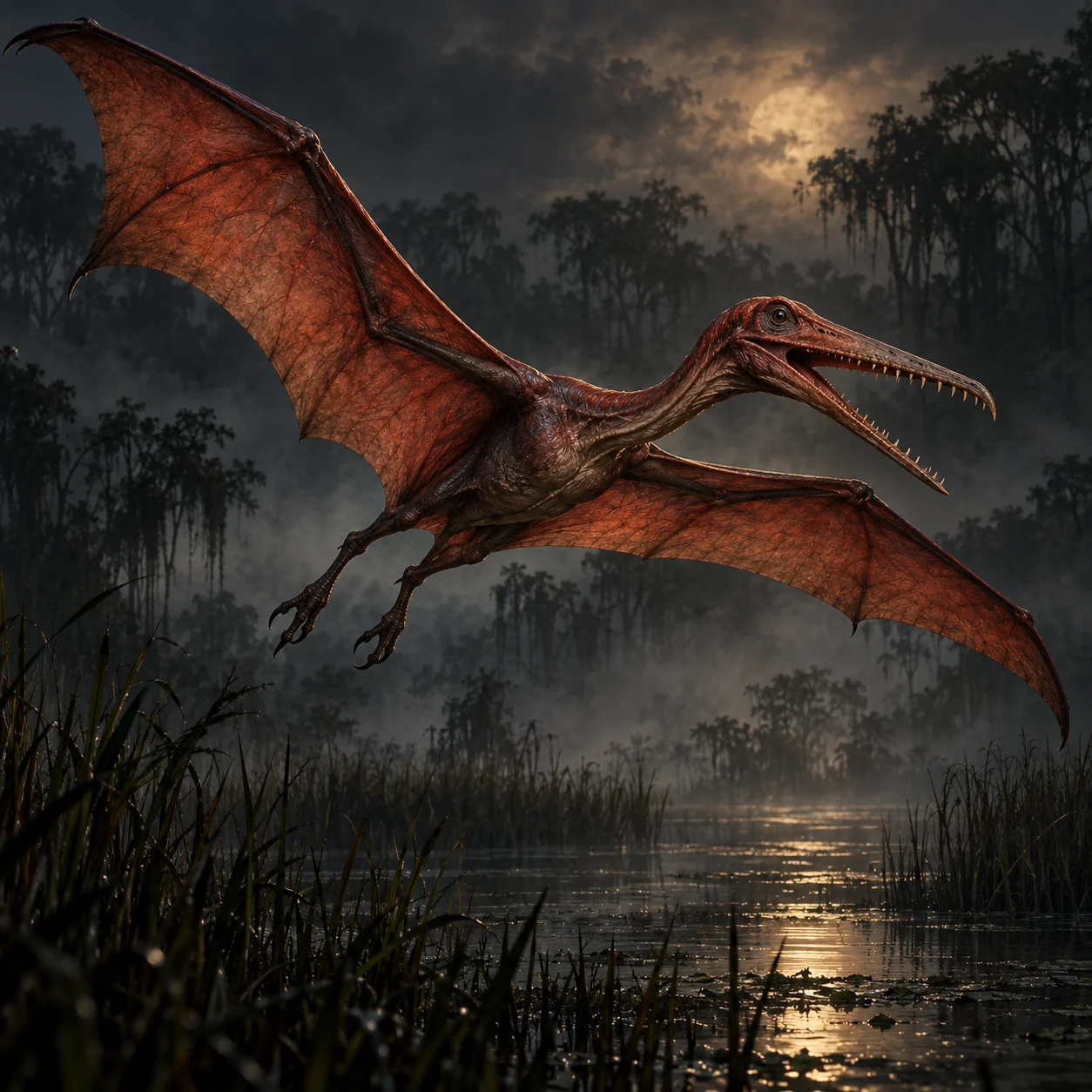
Kongamato adalah kriptid yang dilaporkan oleh penduduk asli dan para peneliti dari Rawa Jiundu di distrik Mwinilunga, Zambia barat, serta dari Angola dan Republik Demokratik Kongo. Makhluk ini dikatakan hidup di sekitar sungai-sungai tertentu dan dianggap sangat berbahaya. Ia digambarkan tanpa bulu, berkulit halus kemerahan, dan berparuh bergigi. Catatan tertulis tertua dalam sumber ini berasal dari buku Frank Melland tahun 1923. Ketika Melland bertanya, penutur menyebutnya bukan benar-benar burung, melainkan lebih mirip kadal bersayap selaput seperti kelelawar, dengan rentang sayap 4 sampai 7 kaki dan warna umum merah. Penduduk yang diajak bicara menunjuk gambar pterosaurus sebagai kongamato. Menurut Melland, tidak ada yang pernah melihat kongamato dari dekat dan hidup untuk bercerita, dan penduduk berkata makhluk itu kebal serta abadi. Mereka tidak menganggapnya hal yang tidak alami seperti mulombe, hanya sesuatu yang sangat mengerikan. Di tempat penyeberangan sungai tertentu, kongamato dikatakan menghentikan aliran air hingga permukaan naik dan menenggelamkan penyeberang. Para skeptis berpendapat bahwa penampakan semacam ini salah mengenali hewan yang sudah dikenal. Menurut artikel kedua, makhluk yang dilihat bisa saja bangau setempat seperti bangau paruh-sepatu atau hewan kelelawar besar yang belum terklasifikasi. Melland sendiri mencatat bahwa dalam kasus kematian di Sungai Mutanda, sungai sedang banjir.
The kongamato is a cryptid reported by indigenous people and researchers from the Jiundu Swamps in the Mwinilunga district of western Zambia, and from Angola and the Democratic Republic of the Congo. Reports place it near particular rivers, where it is thought to pose a serious danger. It is described as featherless, with smooth reddish skin and a toothy beak. The oldest written account in these sources is Frank Melland's 1923 book. When Melland asked, the speaker said it was not really a bird but more like a lizard with membranous wings like a bat, with a wing-spread of 4 to 7 feet and a general colour of red. The people he spoke with pointed to a picture of a pterosaur as the kongamato. According to Melland, anyone who saw a kongamato at close range did not survive to describe it, and the people said the creature is invulnerable and immortal. They did not regard it as an unnatural thing like a mulombe, only as a very awful one. At certain river crossings the kongamato is said to stop the water from flowing so that the level rises and overwhelms the traveller. Skeptics argue that such sightings are misidentifications of known animals. According to the second article, what was seen might be a local stork such as the shoebill or a large, as yet unclassified bat-like animal. Melland himself noted that in the deaths at the Mutanda River, the river was in flood.
Fakta utama
- Budaya / Culture
- Tradisi Afrika Tengah (kelompok regional)
- Kawasan / Region
- Afrika
- Negara / Country
- Zambia, Angola, Democratic Republic of the Congo
- Era
- First recorded in a 1923 book
- Klasifikasi / Classification
- Cryptid
- Habitat
- Water
- Kemampuan / Abilities
- Menghentikan aliran air, Abadi dan kebal