Gogmagog
Ringkasan
Gogmagog adalah raksasa legendaris Matter of Britain yang menurut Geoffrey of Monmouth dilempar dari tebing oleh Corineus dalam pertandingan gulat di Cornwall.
Gogmagog is a legendary giant of the Matter of Britain whom, according to Geoffrey of Monmouth, Corineus hurled off a cliff in a wrestling match in Cornwall.
Kisah dan tradisi
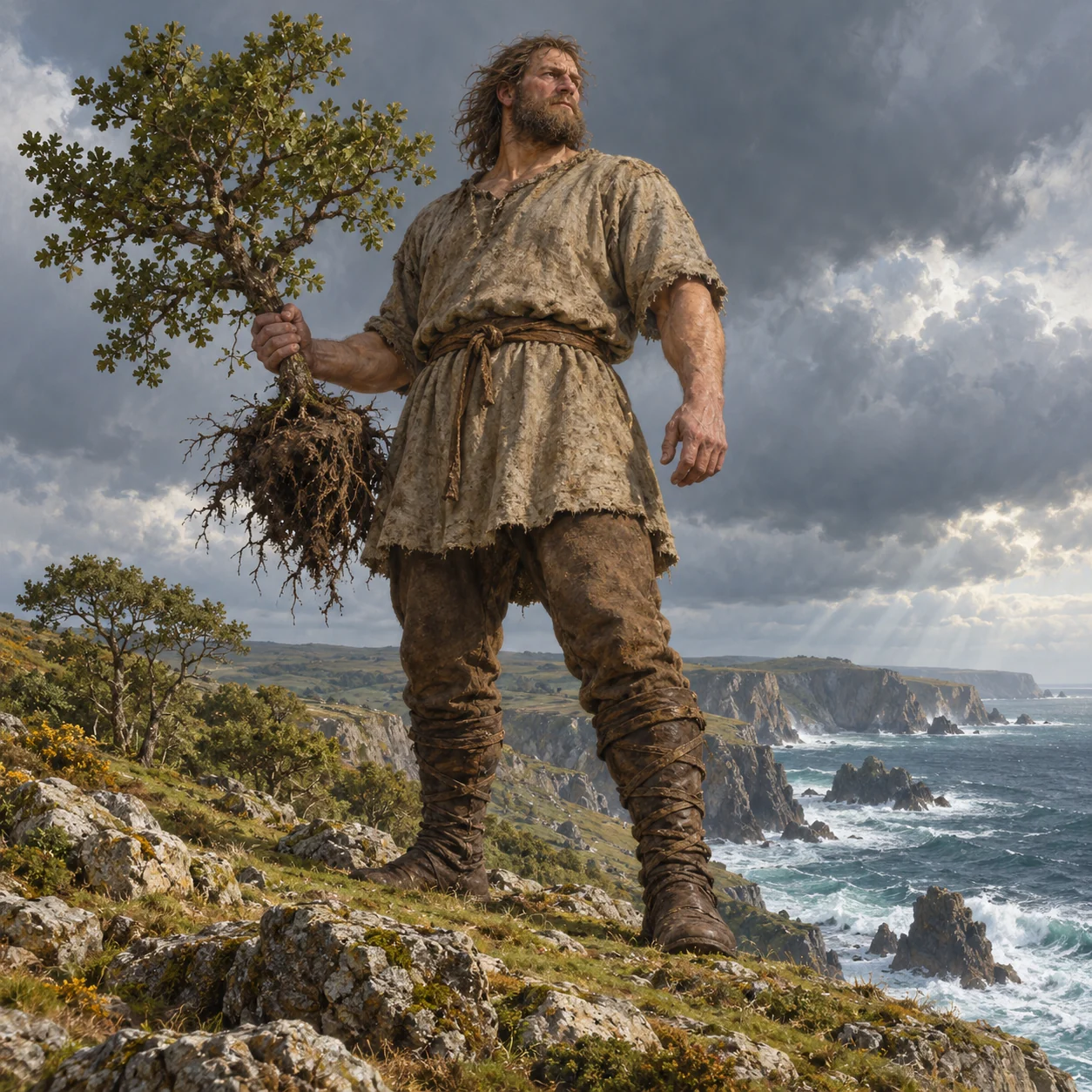
Gogmagog (juga Goemagot, Goemagog, Goëmagot, dan Gogmagoc) adalah raksasa legendaris dalam Matter of Britain. Menurut Historia Regum Britanniae karya Geoffrey of Monmouth (abad ke-12), ia raksasa penghuni Cornwall yang dilempar dari tebing dalam pertandingan gulat dengan Corineus, tokoh asal nama Cornwall dan rekan Brutus dari Troya (Brutus of Troy). Tradisi kemudian menjadikannya keturunan Albina serta kepala dan raksasa terbesar di Albion. Patung Gogmagog dan Corineus yang dipakai dalam pawai Inggris kemudian menjadi patung penjaga di Guildhall, London, dan dikenal sebagai "Gog and Magog". Namanya umumnya dianggap berasal dari tokoh Alkitab Gog dan Magog, tetapi Peter Roberts (1811) berpendapat itu rusakan dari Cawr-Madog, "raksasa atau pejuang agung Madog", sedangkan menurut artikel id Manley Pope (1862) menganggapnya kesalahan penyebutan Gawr Madoc. Dalam terjemahan Giles atas Geoffrey (Old English Chronicles, Gutenberg), Goëmagot digambarkan setinggi dua belas hasta dan begitu kuat sehingga sekali goyang mencabut pohon ek seperti tongkat hazel. Ia mematahkan tiga rusuk Corineus, tetapi Corineus memanggulnya ke puncak batu karang dan melemparkannya ke laut; tempat jatuhnya disebut Lam Goëmagot, "Lompatan Goëmagot".
Gogmagog (also Goemagot, Goemagog, Goëmagot and Gogmagoc) is a legendary giant of the Matter of Britain. In Geoffrey of Monmouth's 12th-century Historia Regum Britanniae he is a giant living in Cornwall who is flung from a cliff while wrestling Corineus, namesake of Cornwall and companion of Brutus of Troy. Later tradition made him a descendant of Albina and the chief and largest giant of Albion. Effigies of Gogmagog and Corineus used in English pageants later became guardian figures at Guildhall in London, popularly called 'Gog and Magog'. His name is usually traced to the biblical Gog and Magog, but Peter Roberts (1811) took it as a garbled Cawr-Madog, 'Madog the giant or great warrior', and per the id article Manley Pope (1862) saw it as a mis-rendering of Gawr Madoc. In Giles's translation of Geoffrey (Old English Chronicles, Gutenberg), Goëmagot is twelve cubits tall and so strong he could pull up an oak at one shake as if it were a hazel wand. He breaks three of Corineus's ribs, but Corineus carries him to the top of a high rock and hurls him into the sea; the spot is called Lam Goëmagot, 'Goëmagot's Leap'.
Fakta utama
- Budaya / Culture
- Tradisi Britania
- Kawasan / Region
- Eropa
- Negara / Country
- GB
- Klasifikasi / Classification
- Giant
- Kemampuan / Abilities
- Kekuatan raksasa
Nama lain / Alternate names
Goëmagot, Goemagog
Tahukah kamu? / Did you know?
Menurut Geoffrey of Monmouth, tempat Gogmagog dilempar ke laut disebut Lam Goëmagot, "Lompatan Goëmagot".
According to Geoffrey of Monmouth, the place where Gogmagog was hurled into the sea is called Lam Goëmagot, 'Goëmagot's Leap'.